
Why an Oil-Water Separator Is Essential for Wash Facilities, Yards, and Fleets
Every time a truck, loader, street sweeper, or refuse vehicle is washed, the rinse water carries more than dust. It’s loaded with road film, leaked hydraulics, drips from fuel lines, brake residue, and fine sediment that hold onto hydrocarbons. Without an effective oil-water separator and supporting wash infrastructure, that contaminated runoff can quickly become a compliance headache, a maintenance drag, and an environmental risk. In the United States, operators face oversight under the Clean Water Act and permit programs like NPDES. Many municipalities also apply local discharge limits for oil and grease. Whether the goal is to discharge to sanitary sewer (with pretreatment), recycle on site, or manage stormwater, separating free and dispersed oils from wash water is a foundational best practice.
From a risk perspective, unmanaged oily wash water can harm pumps, clog drains, foul filters, and trigger sheen violations if it escapes to storm systems. Insurance carriers and auditors increasingly expect documented controls and routine maintenance to reduce spill and pollution exposures. A right‑sized oil-water separator helps organizations strengthen defensible compliance, reduce operating costs, and extend equipment life by enabling consistent removal of oils before they travel further into reclaim systems or discharge points. That consistency is crucial because wash water conditions vary by season and region: think winter brine and de-icer residues in cold climates versus heavy dust and fines during dry construction seasons. A robust separator reduces those swings and supports stable downstream treatment.
Operationally, a well-designed wash area—collection pad or bay, trench drains, solids pit, pump station, and separator—creates predictable flow control and keeps gritty loads out of pumps. The separator then does the heavy lifting of capturing free oils, while upstream solids control prevents sludge from displacing separator volume. Paired with good habits—appropriate detergents, controlled pressure, and routine cleanouts—the system can run economically for years. Across municipal yards, contractor sites, industrial fleets, and public works facilities, deploying a reliable separator is one of the fastest ways to elevate environmental performance without overcomplicating day‑to‑day washing.
How Oil-Water Separators Work and How to Choose the Right Design
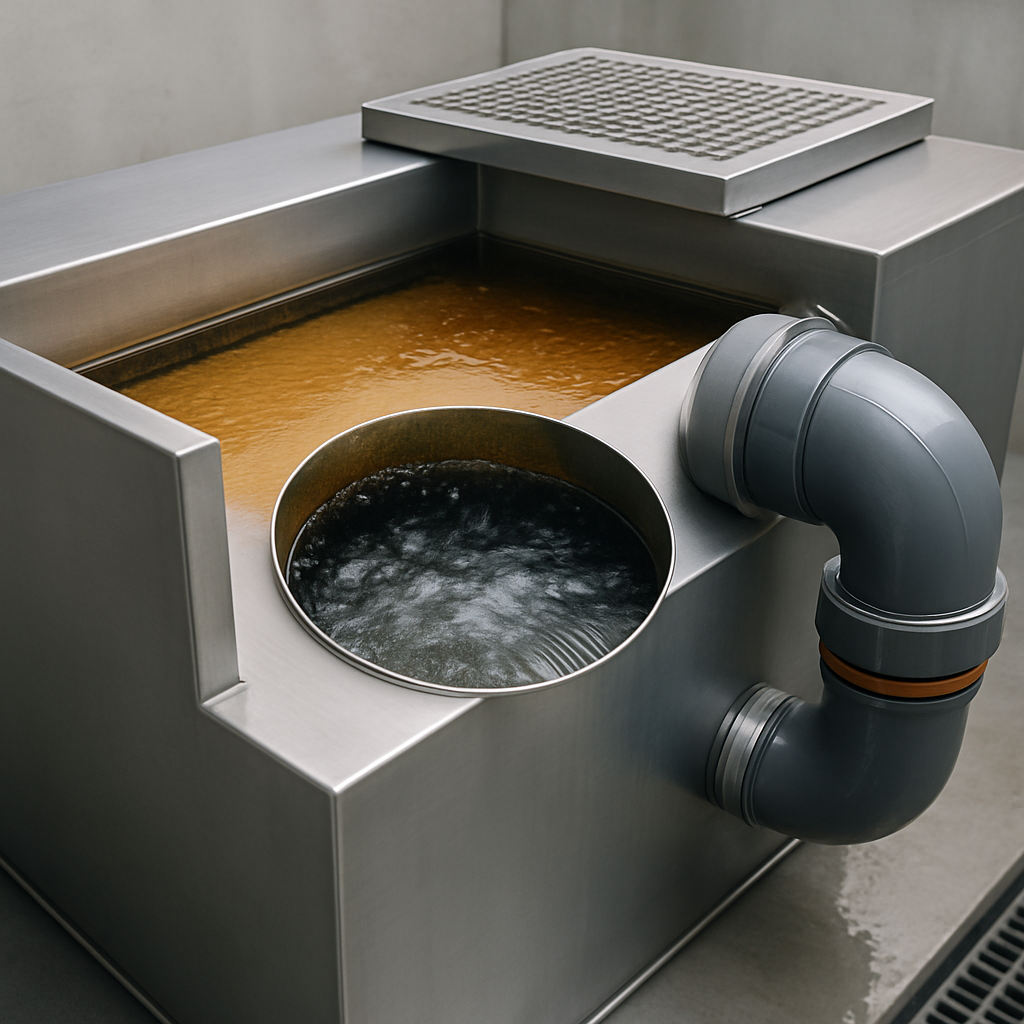
At its core, an oil-water separator exploits the density difference between oil and water. Given adequate residence time and calm conditions, free oil droplets rise to the surface for skimming while heavier solids settle to the bottom. Modern separators improve on basic gravity by using engineered flow paths and coalescing media to encourage smaller droplets to collide, merge, and rise faster. In vehicle and equipment wash settings, coalescing plate separators (parallel plate or corrugated plate designs) are common because they provide compact footprints with reliable removal of free and dispersed oils, even under variable wash flows. Key elements typically include an inlet chamber for initial flow diffusion, a sludge zone, a coalescing pack, a skimming area, and an effluent weir for even discharge.
Selection starts with understanding water quality and process realities. Consider expected peak flow (gpm), solids loading, detergent use, temperature swings, and the types of oils present. Free oil is easily separated; emulsified oil—often driven by high‑pH cleaners or heavy surfactants—requires extra attention. If emulsions are prevalent, strategies may include optimizing detergent chemistry, reducing turbulence, adding pH adjustment upstream, or integrating polishing steps like granular media filtration or dissolved air flotation. For heavy industrial settings (e.g., refineries, terminals), large API separators or enhanced DAF systems may be appropriate. For municipal and contractor wash racks, compact coalescing units paired with solids management are typically the most practical and economical path.
Quality separators balance hydraulics and maintainability. Look for removable coalescing packs that can be lifted and rinsed, robust skimmers that won’t jam on foam or debris, and tank geometries that keep velocities low through the media. Materials matter too: coated steel, stainless, or fiberglass reinforced plastic are common—each with tradeoffs related to cost, corrosion resistance, and onsite handling. Controls can be simple (gravity discharge) or integrated (pumps, level sensors, autofill), depending on whether water is being reused or discharged. If water reclaim is a goal, the separator should sit upstream of recycling filters to extend media life and keep polishing stages from prematurely blinding. Learn more about selecting and integrating an oil-water separator within a compliant wash system.
Finally, size for the real world, not the ideal one. Undersizing invites carryover of oil, while oversizing without proper flow distribution can create dead zones. Work from realistic peak wash flows, and include upstream grit capture so mud and fines don’t consume separator volume. Good design acknowledges human behavior—wash operators will boost pressure, change nozzles, and switch soaps. The best separators forgive those shifts and still meet discharge or reclaim targets when used with sound operating practices.
Implementation, Maintenance, and Real-World Scenarios That Deliver Results
Successful implementation starts at the pad. A sloped, contained surface with trench drains or grated inlets ensures all runoff reaches the collection point. From there, a sump or solids pit captures heavy grit before the pump moves water to the separator. This sequence—pad, solids control, separator, and optional polishing—creates predictable performance. In cold regions, heat tracing or insulated enclosures prevent freezing; in hot climates, shade and venting discourage odor formation. Across geographies, the most consistent programs standardize on compatible detergents that clean effectively without over‑emulsifying oils. That single choice can dramatically improve separator performance and reduce the need for chemical dosing downstream.
Maintenance is straightforward but pivotal. Skim and remove accumulated oil before it builds to the outlet. Clean coalescing packs on a routine schedule—frequency depends on solids load and detergent choice. Pump or vacuum sludge from the bottom chambers so settling volume remains available. Inspect weirs and baffles for even flow distribution, and verify that pumps, floats, and alarms work as intended. Keep simple logs tied to weekly or monthly checks; those records support audits and demonstrate due diligence under permit conditions. When reclaiming water, add periodic checks for odor, clarity, and surfactant buildup—small adjustments upstream (like soap dilution) often prevent larger headaches in the reclaim loop.
Consider three representative scenarios. A municipal fleet yard washing snowplows and salt trucks installs a grated pad feeding a coalescing separator. Upstream grit pits capture sand and salt, preserving separator volume. With a switch to a low‑foaming detergent and scheduled pack rinses, the site sees clearer effluent and fewer winter clogs. A construction contractor in the Pacific Northwest adds a mobile wash pad and compact separator to keep job‑site washdowns from entering storm drains. The kit allows quick setup, consistent oil capture, and easy pump‑out of sludge, satisfying local inspectors during seasonal rains. A waste‑hauling operator in the Northeast pairs its separator with a small carbon filter to reduce odors in reclaimed water cycles, extending media change intervals and keeping wash operations continuous during peak months.
Compliance strategy should match the discharge pathway. For stormwater systems, prevent any sheen release and keep oils to a minimal benchmark through source control, solids capture, and well‑maintained separation. For sanitary sewer discharge, coordinate with the local utility on oil and grease limits, sampling points, and pretreatment requirements. Where recycling is the goal, protect the reclaim filters with good separation and periodic blowdown so the loop doesn’t concentrate contaminants. In all cases, integrate spill kits and training: even the best oil-water separator performs better when operators minimize accidental releases, keep soaps consistent, and understand why gentle washing reduces emulsions. With those practices, wash facilities cut risk, control costs, and keep fleets—and communities—cleaner and safer.

Seattle UX researcher now documenting Arctic climate change from Tromsø. Val reviews VR meditation apps, aurora-photography gear, and coffee-bean genetics. She ice-swims for fun and knits wifi-enabled mittens to monitor hand warmth.