
What Makes Great Outdoor Garage Lighting: Safety, Style, and Performance
When the sun goes down, your garage becomes the gateway to your home—welcoming family, deterring intruders, and setting the tone for curb appeal. The right outdoor garage lights do more than brighten a driveway; they elevate safety, complement architecture, and stand up to weather for years. Start by thinking about safety and visibility. For a typical two-car driveway, plan for 1,500–3,000 lumens total spread across fixtures to reduce shadows at the steps, door, and side paths. Aim to mount fixtures 66–78 inches from grade so light falls across the drive and walkway rather than blasting into eyes or the neighbor’s window. A shielded or semi-cutoff design helps control glare and keeps illumination exactly where you need it.
Next, consider color and clarity. Choose 2700K–3000K for a warm, inviting glow that flatters natural materials like brick, stone, or cedar. If you prefer a crisper appearance for modern façades, 3500K–4000K offers higher contrast without feeling harsh. A high CRI (80+) reveals true paint tones and makes car detailing tasks easier. Pair with motion activation where you want instant-on security, or use a dusk-to-dawn photocell to automate nightly lighting. Many homeowners combine both—photocell for baseline ambient light and motion for brighter “boost” when people or cars approach.
Durability matters as much as design. Wet-location ratings, all-metal construction, powder-coated finishes, and sealed electrical compartments keep fixtures looking fresh through coastal salt air, high-altitude UV, or freeze-thaw cycles. In regions with sea spray or monsoon rains, look for robust steel shades and corrosion-resistant hardware to avoid pitting and peeling. For areas with wildlife or strict neighborhood rules, pick a style with minimal uplight and a warm color temperature to support dark-sky awareness. Thoughtful details—like thick-gauge metal arms, rigid mounting plates, and weatherproof gaskets—translate into fewer callbacks and a cleaner façade over time.
Finally, bring it all together with style. Classic gooseneck barn lights feel right at home on Craftsman and farmhouse architecture, while compact, rectangular sconces suit modern doors and minimalist cladding. Match the finish to hardware like house numbers, door pulls, and mailbox trims for a cohesive entry statement. If you’re upgrading or building new, browse curated collections of outdoor garage lights to compare scale, projection, and beam control side by side and zero in on a look that feels intentionally yours.
Choosing the Right Fixture: Sconces, Goosenecks, and Barn Shades That Fit Your Door and Drive
Fixture type and size can make or break the look of a garage. As a rule of thumb, pick a fixture whose height is roughly one-quarter to one-third the height of the garage door trim. For an 8-foot door, that means a 20–30 inch visual presence across one or multiple fixtures. If you’re flanking a single door with sconces, set them 6–12 inches from the trim edge to frame the opening. For double doors, consider either two larger goosenecks centered above each bay or three smaller sconces spaced evenly—one between doors and one at each outside edge—for balanced symmetry.
Gooseneck barn lights are beloved for their timeless curve and focused downward beam. Choose shallower shades for wide spread or deeper warehouse-style shades when you want tighter pools of light that won’t spill across the street. Sconces with a capped top and bottom diffuser tame glare and prevent uplight—ideal for neighborhoods with dark-sky sensibilities or to minimize distraction for passing drivers. Flush or semi-flush ceiling mounts under a garage overhang add comfortable fill light and visually “lift” the soffit, preventing gloomy corners where cobwebs and dust gather.
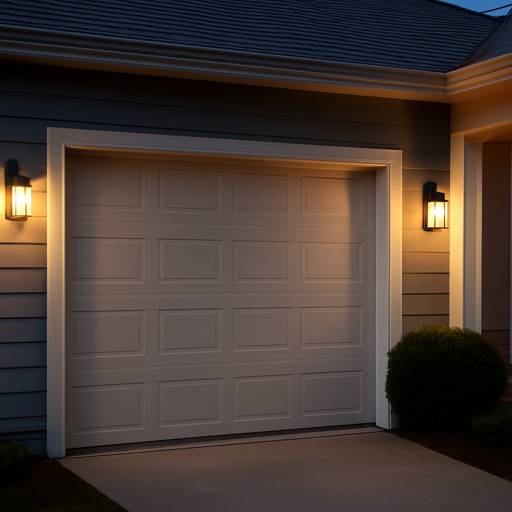
Consider lamping strategy early. Integrated LED fixtures offer efficiency and slim profiles, but E26/E27 socketed designs provide bulb flexibility over time. If you prefer the option to fine-tune color temperature seasonally—2700K for cozy holidays, 3000K–3500K for spring and summer—choose a socketed fixture with dimmable, enclosed-rated bulbs. For motion detection, verify the sensor’s placement won’t face moving foliage or busy streets, which can cause nuisance trips. If you love the look of a big 14–16 inch barn shade above a double door, pair it with a photocell so the light follows the sun rather than your schedule.
Real-world pairing examples help: A mid-century ranch in Phoenix with smooth stucco and horizontal lines benefits from a low-profile, rectangular sconce in a matte black finish and 3000K output; glare control keeps the desert night calm. A cedar-clad lake house in Minnesota often chooses two deep-shade goosenecks in warm 2700K to prioritize downward light and reduce snow-glare on the driveway. And in coastal Carolina, homeowners reach for thick-gauge, powder-coated steel shades with marine-tough hardware that resist salt air without fading. Each choice balances aesthetics, performance, and the site’s climate reality.
Installation and Maintenance Tips for Long-Lasting Results
A little prep goes a long way during install. Start by confirming your junction box is secure and flush to the siding or masonry, with a sturdy mounting plate to keep the fixture from rocking in wind. Use a bead of exterior-grade sealant behind the backplate (avoid sealing the bottom weep path) and compress weather gaskets evenly so water can’t sneak in. On lap siding, add a flat mounting block for a clean, professional look and a tight seal. If you’re replacing old coach lights, measure projection; many goosenecks extend farther, which can improve spread across the drive but may need clearance planning for opening gates or stacked stone columns.
Wire with care. Pair dimmable LEDs with compatible controls to avoid flicker, and consider a photocell or smart switch to automate on/off without manual effort. In colder climates, select sensors rated for subzero temps; in humid regions, ensure all connections are protected with weather-resistant wire nuts and that fixtures are clearly rated for wet locations. If you’re in a municipality with dark-sky initiatives, choose shielded forms and warmer tones. Where energy codes apply, look for fixtures that meet efficacy targets while still offering the classic look you want. When in doubt, a licensed electrician can confirm code compliance and mount heights that align with local best practices.
Care and upkeep keep fixtures looking handcrafted and intentional. Wipe powder-coated steel shades a few times a year with mild soap and water to remove dust, salt, and pollen; skip abrasive pads that can dull the finish. Inspect set screws, arms, and junction box screws annually, especially in windy zones. Replace gaskets that show compression wear to maintain a watertight seal. If you change bulbs, choose enclosed-rated LEDs for fully covered shades and maintain consistent color temperature across all garage and entry fixtures to prevent a patchwork of whites.
Consider a quick design refresh after the first season. If plantings or a new fence altered how light falls, adjust locations or add a companion sconce near a side door. Homeowners often discover small quality-of-life wins: a motion-enabled side sconce near the trash bins; a low-glare gooseneck above the address plaque for clearer deliveries; or a flush mount under the soffit that eliminates dark pockets by the keypad. The unifying thread is durable, well-crafted metalwork that resists weather and transcends trends—fixtures that feel as solid as your front door and as dependable as your morning routine. With thoughtful selection and simple maintenance, your outdoor garage lights will protect, welcome, and impress every day they shine.

Seattle UX researcher now documenting Arctic climate change from Tromsø. Val reviews VR meditation apps, aurora-photography gear, and coffee-bean genetics. She ice-swims for fun and knits wifi-enabled mittens to monitor hand warmth.